


-

The Missing Link in Security: Physical Force in the Last Mile • Diponto February 23, 2026
-
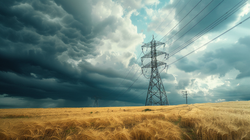
Beyond the Algorithm: Why Grid Resiliency Needs Physical Alerting • Diponto
Data travels at light speed, but decisions take time—time a wildfire doesn't grant. Why we need to move from centralized AI to 'One Tower, One Guardian' physical signaling.

I recently returned from DISTRIBUTECH, the global epicenter of energy transmission technology. The expo floor was paved with buzzwords: predictive AI, self-healing grids, and digital twins. The investment in software is staggering. Yet, walking those aisles, I noticed a dangerous silence regarding the physical reality of the "Last Mile"—the farm, the remote community, the forest edge. We are building brilliant algorithms to predict disasters, but we lack the brute force to announce them when they happen.
The Latency Trap
The current safety architecture is too slow. It relies on a linear chain: a sensor detects a fault, data travels to the cloud, an algorithm flags an anomaly, a human in a control room verifies it, and finally, an alert is pushed to a smartphone. In the context of a wildfire sparked by a downed line or a flash flood, that latency is fatal. A text message (SMS) is a polite suggestion; a disaster is a rude interruption. Furthermore, reliance on cellular networks during catastrophes is a gamble we keep losing. As we saw in the floods of Rio Grande do Sul, when the power goes out, the towers go down, and the silence kills.
Physics Must Override Digital Bureaucracy
This is where we advocate for a "One Tower, One Guardian" philosophy. The grid needs decentralized, edge-based signaling directly on the transmission infrastructure. A localized Mass Notification System—powered by solar autonomy and triggered by direct RF or satellite—bypasses the "cloud lag." It doesn't ask for permission to scream; it reacts.
Towers as Independent Sentinels
Technically, this means retrofitting existing steel transmission towers with acoustic emitters capable of delivering high decibel pressure (120dB+). It’s not just about noise; it’s about engineered sound waves that trigger the primal "fight or flight" response in the human brain. This is the difference between a notification you swipe away and a physical signal that forces you to evacuate.
From Components to Survival
At Diponto, our heritage is Germanic. We don't view signaling as an accessory; we view it as a component of survival. We moved from selling components to architecting safety solutions because technology is useless if it doesn't solve real human pain. The future of utility safety isn't just in a dashboard in Houston; it's in a robust piece of hardware standing guard on a lonely transmission tower, ready to do its job when the algorithm is still "processing."
Discuss your next project with our engineering team.
Contact UsOr email us directly: projects@diponto.com